

Iran’s Economy 2025: Dollar Crisis, Inflation, and the Struggle for Stability
Kazi Abul Monsur#
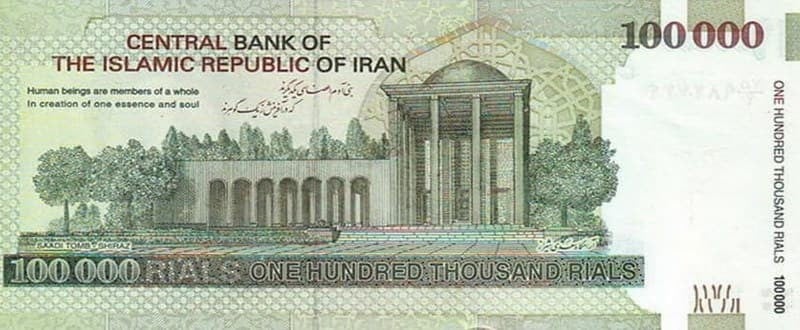
In Iran’s financial market, each U.S. dollar is now exchanged for around 1,146,000 Iranian Rials (IRR), with transactions peaking at 1,152,000 Rials per dollar. Although this slight appreciation signals a modest recovery of the Rial, in reality, it reflects Iran’s severe dollar shortage and deep-rooted financial crisis. The country’s currency market remains unstable, primarily due to ongoing international sanctions and economic restrictions.
According to Wikipedia data, Iran’s nominal GDP for 2025 is estimated at $490.01 billion. However, the country’s foreign currency reserves stand at only $23.6 billion (as of 2024) — barely enough to cover external debts and import expenditures. Meanwhile, Iran’s gold reserves are estimated to be worth around $7.69 billion or slightly higher.
Customs statistics show that in the Persian year 1403, Iran imported about 100 metric tons of gold, valued at approximately $8 billion. Due to the recent surge in global gold prices, the current value of that imported gold may now exceed $10 billion.
Despite facing enormous challenges in recent years, Iran’s foreign debt levels remain relatively moderate. As of March 20, 2025, the country’s total external debt stood at $4.86 billion, significantly lower than in 2024. Of this, $3.1 billion was short-term debt, and about $1.76 billion was long-term debt. Iran’s reduced reliance on foreign loans stems from its strategic focus on domestic investment and resource mobilization, particularly in infrastructure and industrial development — a policy that has yielded some tangible benefits.
According to the Statistical Center of Iran (SCI), the inflation rate for the 12 months ending June 21, 2025 (Khordad 1403) reached 34.5%, marking a 0.6% increase from the previous month. The unemployment rate during the same period stood at around 9%.
Trading Economics projects Iran’s unemployment rate to reach 7.5% in 2025, up from 7.2% in 2024, while the IMF forecasts the rate could exceed 9.5% by year-end 2025.
Although final figures for Iran’s foreign trade in 2025 are yet to be released, data for the first 11 months (ending March 1, 2025) show total trade volume reaching $117 billion, with exports worth $70.5 billion and imports valued at $46.5 billion.
In conclusion, despite years of harsh sanctions, political turbulence, and international isolation, Iran continues to sustain its economic survival. The country is gradually shifting from an oil-dependent economy toward one driven by industrialization and domestic production. Even amid foreign currency shortages, high inflation, and widespread unemployment, Iran appears determined to move toward economic self-reliance and technological advancement.##